List of Undetectable VPN for Microsoft Edge Browser: What to Know
Compare VPNs for Microsoft Edge, understand what “undetectable” means, and choose a provider with useful privacy features.
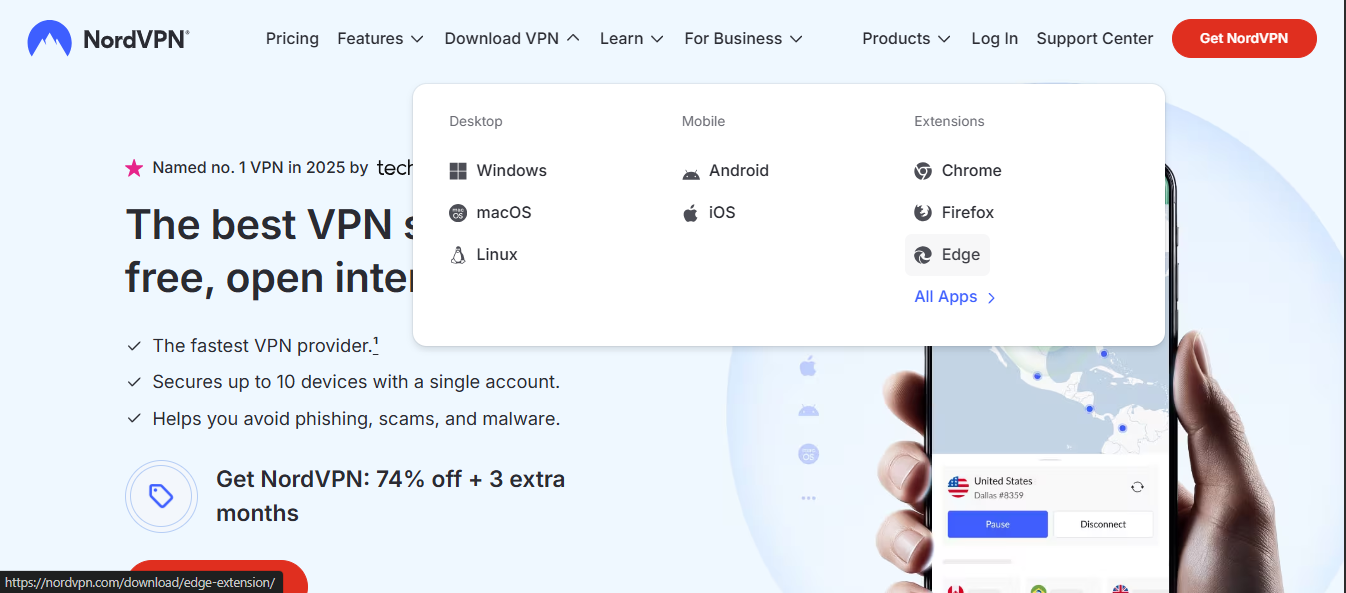
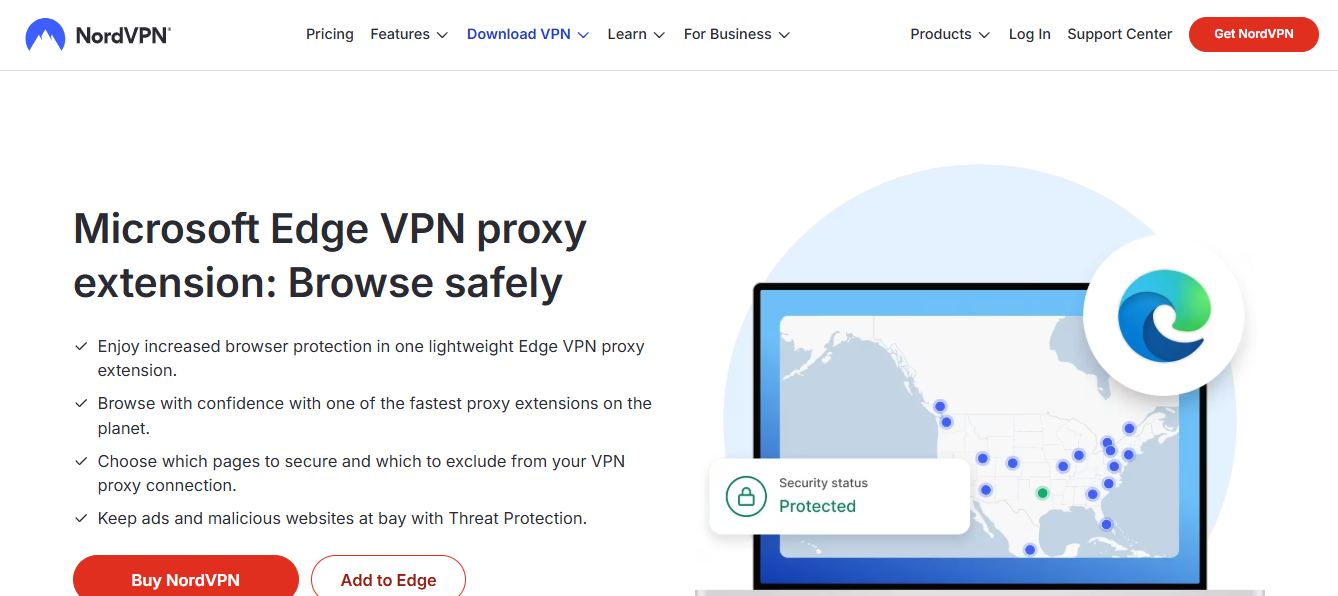
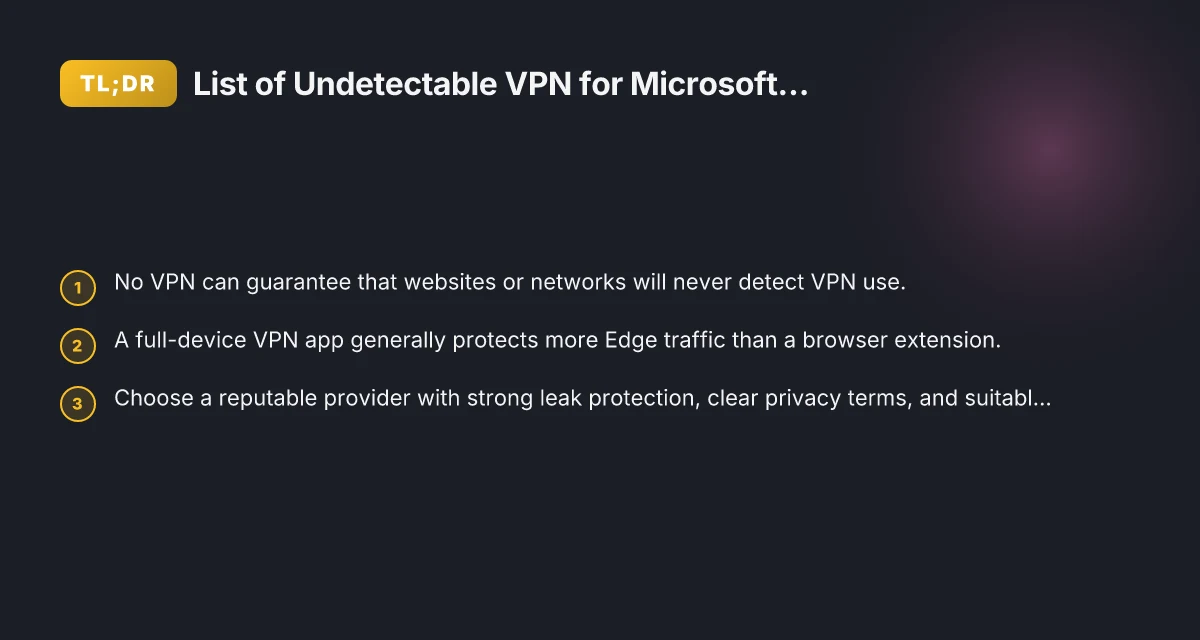
If you’re looking for a list of undetectable VPN for Microsoft Edge browser, consider providers such as NordVPN, Surfshark, Proton VPN, ExpressVPN, and Mullvad. Each offers VPN protection that can be used with Edge, usually through a Windows, macOS, or mobile app. Some also offer browser extensions. However, “undetectable” is not a guarantee: websites, streaming platforms, employers, and network administrators may still recognize VPN traffic or block a VPN server’s IP address.

Editor's pick: NordVPN — fast, secure VPN — Strong encryption, a no-logs policy and apps for every device. 30-day money-back guarantee. Get NordVPN →
Comparison of the VPN options for Microsoft Edge
| Option | How it works with Edge | Traffic covered | Stealth capability | Best suited for |
|---|---|---|---|---|
| VPN browser extension | Runs inside Edge | Browser traffic | Depends on provider | Browser-only protection |
| VPN desktop app | Runs on the device | Device traffic | Depends on provider | Broader protection |
| Edge proxy settings | Routes configured browser traffic | Browser traffic | Usually limited | Basic routing needs |
| Built-in VPN feature | Depends on the feature offered | Varies | Varies | Users seeking simple setup |
| Free VPN service | Extension or desktop app | Varies | Often limited | Occasional use |
| Paid VPN service | Extension or desktop app | Varies | May offer obfuscation | Regular use |
| Obfuscated VPN servers | Usually through a VPN app | Device traffic | Designed to disguise VPN traffic | Restrictive networks |
| Tor over VPN | VPN app plus Tor Browser | Tor Browser traffic | Varies | Additional privacy layers |
Compiled November 2026; check the provider's site for current details.
| VPN | Obfuscation | From / month | Plan | Free plan | Refund | Alipay | UnionPay | Crypto | Website opens in China | Trustpilot | |
|---|---|---|---|---|---|---|---|---|---|---|---|
 NordVPN | Turn on manually Obfuscated Servers / NordWhisper | $3.49/mo | 27 months: $94.23 | No | 30 days | ? | ✗ | ✓ | ✓ | ✗ Blocked | 4.2/5 (51,628 reviews) |
 Surfshark | ✓ On by default Camouflage, with OpenVPN | See site | See site | No | 30 days | ✗ | ✗ | ✗ | ✓ | ✗ Blocked | 4.3/5 (31,823 reviews) |
 Proton VPN | Turn on manually Stealth, free plan too | $2.99/mo | 12 months: $35.88 | Yes | 30 days | ✗ | ✗ | ✗ | ✓ | ✗ Blocked | 2.1/5 (1,040 reviews) |
 ExpressVPN | ✓ On by default all servers | $3.00/mo | 28 months: $84 | No | 30 days | ✗ | ✗ | ✓ | ✗ | ✗ Blocked | 4.4/5 (29,706 reviews) |
 Mullvad | Turn on manually QUIC / Shadowsocks / LWO | $5.61/mo | €5/mo | No | 14 days | ✗ | ✗ | ✗ | ✓ | ✗ Blocked | 3.2/5 (192 reviews) |
 ZoogVPN | Turn on manually Shadow | $2.49/mo | 27 months: $59.99 | Yes | 7 days | ✓ | ✓ | ✓ | ✓ | Official site blocked; our special link opens (4.4 s) | 4.2/5 (195 reviews) |
 Astrill VPN | Turn on manually StealthVPN / OpenWeb | $12.50/mo | 24 months: $300 | No | See site | ✗ | ✗ | ✗ | ✓ | ✗ Blocked | 1.3/5 (110 reviews) |
 Private Internet Access | Turn on manually Shadowsocks, OpenVPN only | $2.03/mo | 40 months: $81.2 | No | 30 days | ✗ | ✗ | ✗ | ✗ | ✗ Blocked | 4.2/5 (11,033 reviews) |
 CyberGhost | Turn on manually selected servers | $2.19/mo | 28 months: $61.32 | No | 45 days | ✗ | ✗ | ✗ | ✓ | ✗ Blocked | 4.0/5 (24,178 reviews) |
 PureVPN | Turn on manually switch to OpenVPN | $1.69/mo | 60 months: $101.55 | No | 31 days | ? | ? | ✗ | ✓ | ✗ Blocked | 4.4/5 (17,994 reviews) |
 AdGuard VPN | ✓ On by default TrustTunnel | $2.99/mo | 24 months: $71.76 | Yes | 30 days | ✓ | ✗ | ✓ | ✓ | Official site blocked; our special link opens (3.7 s) | 4.3/5 (290 reviews) |
 Windscribe | Turn on manually Stealth / WStunnel | $5.75/mo | 12 months: $69 | Yes | See site | ✗ | ✗ | ✗ | ✓ | ✗ Blocked | 4.7/5 (13,355 reviews) |
 StrongVPN | Turn on manually Scramble, OpenVPN TCP | See site | See site | No | 30 days | ✓ | ✗ | ✗ | ✗ | ✗ Blocked | 4.4/5 (2,695 reviews) |
 LightXtreme 闪连 | Not listed | $7.08/mo | 12 months: $84.99 | Yes | 30 days | ✓ | ✓ | ✓ | ✓ | ✓ Yes (3.5 s) | No page |
Prices checked 2026-11-10 on each vendor's pricing page (cheapest long plan, USD). Check the vendor's checkout for the final price.
Obfuscation checked 2026-11-14 on each vendor's site and help center: "on by default" = nothing to set; "turn on manually" = switch protocol or mode in settings; "not listed" = the vendor describes no obfuscation.
Payment methods checked 2026-11-10 on each vendor's payment pages: all 14 take cards and PayPal; ✗ = not listed, ? = the vendor's own pages disagree.
China access: whether the official website opens from mainland China networks (tests the website only, not the VPN connection). Last checked 2026-11-18 01:02 Beijing time.
Trustpilot score and review count checked 2026-11-10.
What “undetectable VPN” really means
A VPN encrypts traffic between your device and a VPN server, helping prevent a local network operator from seeing the contents of your connection. To websites, your connection generally appears to come from the VPN server’s IP address rather than your regular one.
Some VPNs offer obfuscation, sometimes called stealth or camouflage technology. It can make VPN traffic harder for certain networks to identify, but it does not make a connection invisible. A website may flag an IP address because many people use it, while an organization may detect VPN use through device management or network monitoring.
Keep these limits in mind:
- A VPN does not hide your identity when you sign in to an account.
- Browser cookies, fingerprinting, and location permissions can still reveal information.
- VPN IP addresses may be blocked or challenged with CAPTCHA tests.
- A VPN cannot override workplace, school, or service rules.
VPN options for Microsoft Edge
Edge can use VPN protection in two main ways: by connecting your whole device through a VPN app, or by installing a browser extension. A provider’s extension may protect only browser traffic, while its desktop app can cover other apps as well. Check the provider’s documentation to confirm how its products work. SSL VPN poscoenc: How to Access POSCO E&C’s Remote Network
| Provider | Edge protection options | Features to check |
|---|---|---|
| NordVPN | Desktop app and browser extension | Obfuscated servers on supported plans and networks; leak protection |
| Surfshark | Desktop app and browser extension | Camouflage-related features, connection controls, and leak protection |
| Proton VPN | Desktop app and browser extension | Strong privacy documentation and supported advanced connection options |
| ExpressVPN | Desktop app and browser extension | App-based protection and browser controls; feature availability varies |
| Mullvad | Desktop app; check current browser-extension availability | Privacy-focused account setup and documented connection options |
Features, names, availability, and plan requirements can change. Before subscribing, verify current details on the provider’s official site, especially whether obfuscation is available on your device and in your region. Do not assume that a browser extension includes every feature found in the full VPN app.
How to choose a VPN for Edge
| Criterion | What to check | Why it matters | Good sign |
|---|---|---|---|
| Edge support | Extension or app compatibility | Ensures it works with your browser | Current Edge support |
| Traffic coverage | Browser-only or device-wide routing | Shows which apps are protected | Clearly stated coverage |
| Obfuscation | Whether traffic-disguise modes are available | May help on VPN-restricting networks | Specific obfuscation feature |
| DNS leak protection | Whether DNS requests use the VPN | Helps avoid exposing lookups | Built-in DNS protection |
| Kill switch | Whether traffic stops if VPN drops | Reduces accidental exposure | Automatic blocking |
| Privacy policy | Logging and data handling terms | Helps assess privacy claims | Clear, specific policy |
| Performance | Speed and connection stability | Affects browsing experience | Reliable connections |
| Ease of use | Setup and server selection | Makes protection easier to maintain | Simple Edge-compatible setup |
Compiled November 2026; check the provider's site for current details.
How to choose a VPN for Edge
Start with the protection you actually need. If you want to protect Edge and other internet-connected apps, install the provider’s official desktop or mobile app. If you only want browser traffic routed through a VPN, an extension may be convenient, but read its permissions and coverage details carefully. How Do U Deactivate Norton VPN to Help Fix Connection Issues?
Look for:
- Leak protection: Check for DNS and IPv6 leak safeguards, plus a kill switch in the full app.
- Clear privacy practices: Read the provider’s privacy policy and independent audit information. An audit is useful evidence, not an absolute guarantee.
- Reliable performance: A large server network can offer more options, but server count alone does not prove quality.
- Obfuscation, if needed: Confirm exactly which protocols, servers, apps, and platforms support it.
- Transparent pricing: Review renewal prices, refund terms, and simultaneous-device limits.
- Good support: Setup instructions and responsive help can matter when Edge or a network blocks a connection.
Avoid choosing a service solely because it advertises itself as “undetectable.” That word is a marketing claim unless the provider explains what technology it uses and what limitations apply.
Set up VPN protection with Microsoft Edge
For broad device coverage, download the official VPN app from the provider, install it, and sign in. Choose a server, connect, and then open Edge. If your provider offers obfuscation and your network appears to block ordinary VPN connections, follow its instructions for enabling the relevant mode.
For an Edge extension, install it from Microsoft Edge Add-ons or use the provider’s official installation instructions. Review the requested permissions, sign in, and connect. Avoid extensions from unknown publishers that claim to provide free or invisible VPN service. VPN Xbox Browser: What Works and How to Set It Up
After connecting, you can run a reputable IP and DNS leak test. This can help identify whether your apparent IP or DNS requests are exposed, but it does not prove that a website cannot recognize VPN use. For stronger protection, enable the app’s kill switch and automatic-connect options where appropriate.
Setup and detection checks for VPN protection with Edge
| Step or check | What to do | What it helps with | If detection continues |
|---|---|---|---|
| Install the VPN | Use the provider’s official app or Edge extension | Starts VPN protection | Confirm the product supports Edge |
| Connect to a server | Choose a location and connect | Routes traffic through the VPN | Try another server |
| Check your public IP | Compare it with your usual IP | Confirms apparent location changed | Reconnect or check routing |
| Check for DNS leaks | Use a reputable leak-test tool | Finds exposed DNS requests | Enable DNS leak protection |
| Review WebRTC settings | Check for browser IP exposure | Helps identify browser-related leaks | Adjust settings or use an extension |
| Enable a kill switch | Turn it on in the VPN app, if available | Blocks traffic during disconnects | Reconnect before browsing |
| Try obfuscation | Enable it if the provider offers it | May disguise VPN traffic | Choose a compatible server |
| Consider other detection causes | Check account, cookies, GPS, or device signals | Explains detection unrelated to IP | Review site permissions and sign-in state |
Compiled November 2026; check the provider's site for current details.
Common reasons VPN connections are still detected
A VPN may work well for privacy on public Wi-Fi yet fail to access a particular site. This is often because the service recognizes a shared or previously flagged VPN IP address, not because your VPN has stopped encrypting traffic. Dodgy Dave Stick and VPN: What You Need to Know Before Buying
Other possible causes include:
- The site uses account history, cookies, GPS permissions, or browser fingerprinting.
- The VPN extension is disconnected while the desktop app is active, or vice versa.
- DNS, IPv6, or WebRTC settings expose information that the VPN does not cover.
- The network blocks known VPN protocols or server addresses.
- The service’s terms restrict VPN access.
If a site blocks a VPN, check its terms and your provider’s troubleshooting guidance. Do not use a VPN to bypass workplace or school security controls, violate service rules, or evade legal restrictions.
Recommendation
For most Edge users, a reputable provider’s full-device app is the best starting point because it can protect traffic beyond the browser. Compare NordVPN, Surfshark, Proton VPN, ExpressVPN, and Mullvad based on current features, privacy terms, price, and device support. If your main concern is VPN blocking, choose a provider that clearly documents obfuscation for your platform, but treat “undetectable” as an aspiration, not a promise.