How to Change Proxy Settings in Edge

Learn how to find and change proxy settings in Microsoft Edge, configure a proxy, and troubleshoot common connection problems.
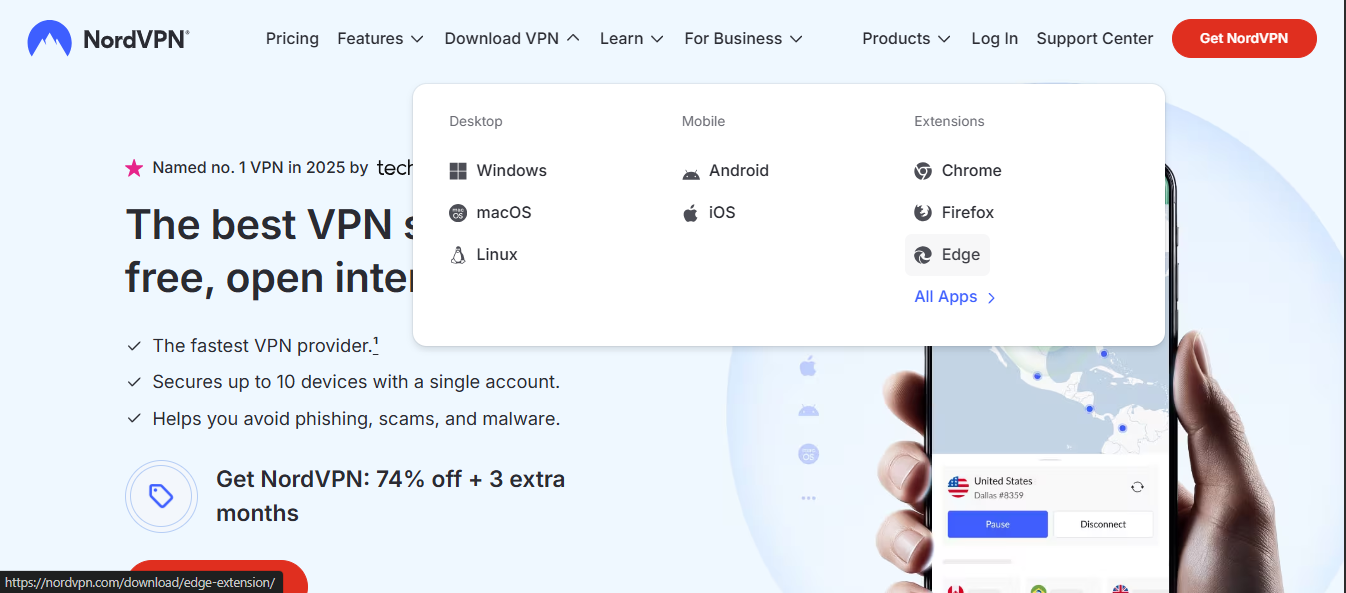
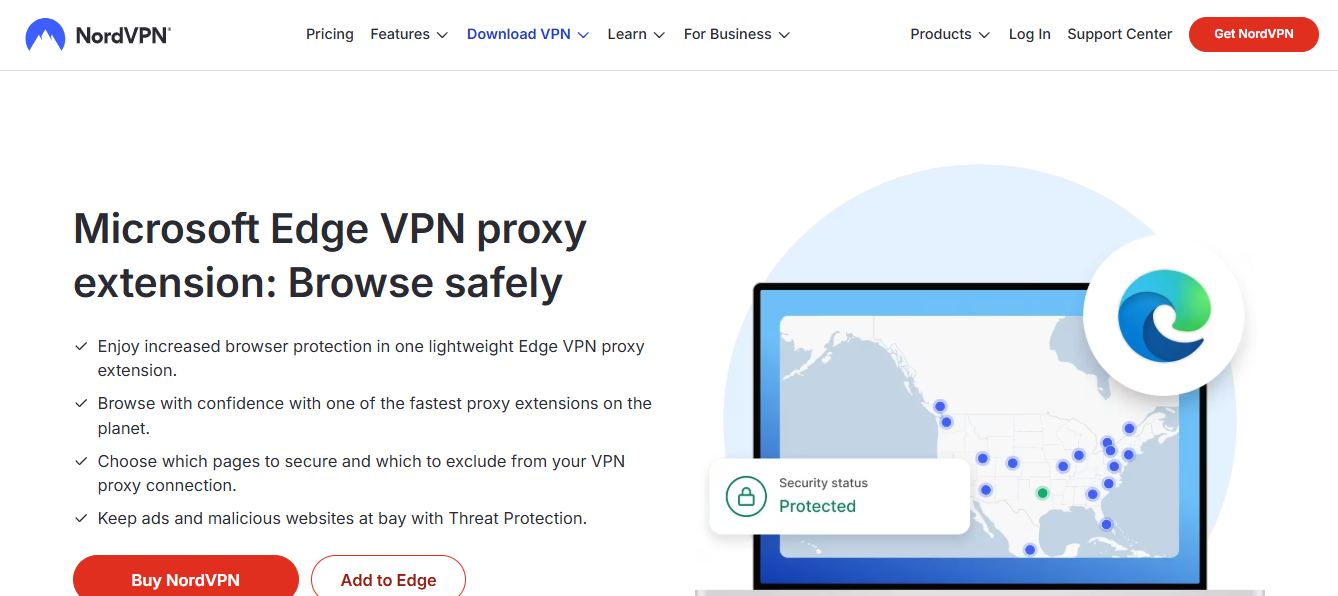
To change proxy settings in Edge, open Settings and more (…) > Settings > System and performance, then select Open your computer’s proxy settings. Edge opens the proxy controls for your operating system because it generally relies on the device’s network settings. Choose automatic detection, a setup script, or a manual proxy only if you know which option your network requires.

Editor's pick: NordVPN — fast, secure VPN — Strong encryption, a no-logs policy and apps for every device. 30-day money-back guarantee. Get NordVPN →
Compare proxy settings in Edge by network setup
| Option | Best for | Where to configure | Applies to | Main consideration |
|---|---|---|---|---|
| Automatically detect settings | Networks that provide proxy details automatically | Windows proxy settings | Windows device | No manual proxy address needed |
| Use setup script | Networks with a proxy configuration URL | Windows proxy settings | Windows device | Requires the script address |
| Use a proxy server | A known proxy address and port | Windows proxy settings | Windows device | Requires server details |
| Turn off proxy | Direct connections without a proxy | Windows proxy settings | Windows device | May not work on managed networks |
| macOS network proxy | A proxy configured for a Mac network service | macOS Network settings | Selected network service | Settings are outside Edge |
| Organization-managed proxy | Work or school network requirements | Contact the administrator | Managed device or network | Available options may be restricted |
Compiled November 2026; check the provider's site for current details.
Open the proxy settings from Edge
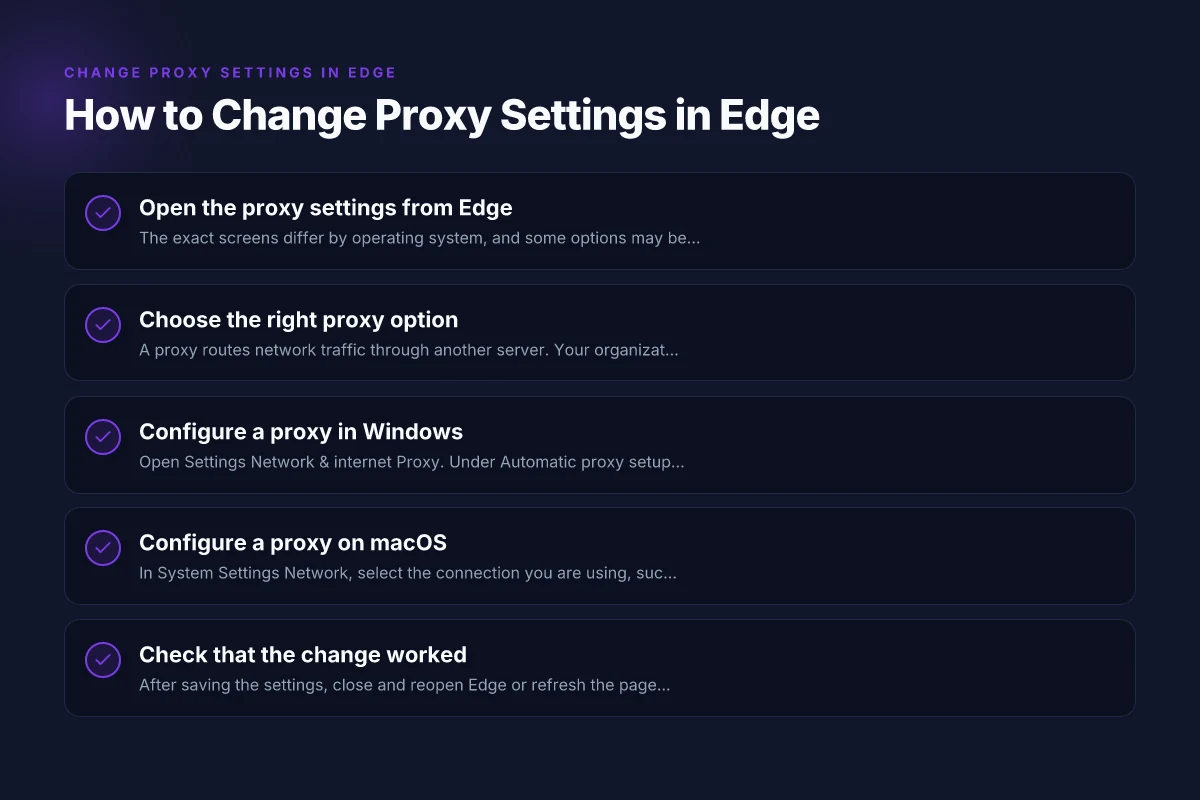
The exact screens differ by operating system, and some options may be managed by your workplace or school.
- Open Microsoft Edge.
- Select the three-dot menu (Settings and more) in the upper-right corner.
- Select Settings, then System and performance.
- Choose Open your computer’s proxy settings.
On some Edge versions, the link may appear under System. If you do not see it, open your operating system’s settings and search for Proxy.
Windows
In Windows 11, Edge opens Settings > Network & internet > Proxy. You can also get there directly:
- Open Start > Settings.
- Select Network & internet > Proxy.
In Windows 10, open Settings > Network & Internet > Proxy. The labels can vary slightly by Windows version. NordVPN Edge: How to Use NordVPN with Microsoft Edge
macOS
On a Mac, Edge takes you to the system network settings. Open System Settings > Network, select your active network connection, and look for Details or Advanced > Proxies. The wording depends on your macOS version.
Choose the right proxy option
A proxy routes network traffic through another server. Your organization or proxy provider should tell you which settings to use. Do not enter a random server address or enable every option. Incorrect settings can prevent browsing.
| Option | What it does | When to use it |
|---|---|---|
| Automatically detect settings | Lets the device discover proxy settings on the network | When your organization or network supports automatic detection |
| Use setup script | Applies settings from a configuration script URL | When an administrator provides a script address |
| Manual proxy setup | Sends traffic through a specified proxy server and port | When you are given a server address and port |
| No proxy | Connects without a configured proxy | Only when your network allows direct access |
A proxy is different from a VPN. A proxy may apply only to certain connections or apps, while a VPN typically creates a broader encrypted connection. Follow your organization’s instructions if it requires a particular service.
Choose a proxy configuration method Mac VPN: How to Choose and Use a VPN on Your Mac
| Method | Information needed | Manual setup | Suitable when | Check before choosing |
|---|---|---|---|---|
| Automatic detection | Network-provided settings | No | The network configures proxies automatically | Confirm the network supports detection |
| Setup script | Script URL | Yes | The administrator supplies a configuration URL | Use the correct URL |
| Proxy server | Server address and port | Yes | The administrator supplies server details | Confirm any required exceptions |
| Windows settings | Depends on selected option | Varies | Edge opens the system proxy controls | Changes may affect other apps |
| macOS settings | Proxy details for the network service | Varies | Edge opens macOS network controls | Select the correct network service |
| Administrator guidance | Network-specific instructions | Varies | Settings are managed by an organization | Avoid changing managed settings without approval |
Compiled November 2026; check the provider's site for current details.
Configure a proxy in Windows
Open Settings > Network & internet > Proxy. Under Automatic proxy setup, choose the option your network requires.
Use automatic detection
Turn on Automatically detect settings if your network administrator recommends it. Windows will attempt to detect the appropriate configuration. This option does not require you to type a server address.
Enter a setup script
If you have a proxy script URL: IPsec MTU: How to Calculate and Troubleshoot the Right Size
- Turn on Use setup script.
- Enter the script address in the Script address field.
- Select Save.
Check the address carefully. A script must be reachable from your network, and a typo can stop the proxy from working.
Enter a manual proxy
If you have a server and port:
- Under Manual proxy setup, select Set up or turn on Use a proxy server.
- Enter the proxy Address and Port supplied by your administrator or provider.
- Add any exclusions in the bypass field, if instructed.
- Save the settings.
Some Windows versions let you bypass the proxy for local addresses. Enable that only if it matches your network’s requirements. If authentication is required, Windows or the proxy may prompt you for credentials when you browse.
Configure a proxy on macOS
In System Settings > Network, select the connection you are using, such as Wi-Fi or Ethernet, and open Details or Advanced. Select Proxies to view the available proxy types. Big IP F5 VPN Download: Get the Official Client Safely
Depending on your network’s instructions, you can enable automatic proxy discovery, enter an automatic proxy configuration URL, or select a specific proxy protocol and provide its server and port. Select OK or Apply to save changes. If the controls are unavailable, your Mac may be managed by an organization or you may need administrator access.
Verify a proxy change
| Check | What to do | Expected result | If it does not work |
|---|---|---|---|
| Proxy option | Reopen the system proxy settings | The intended option is selected | Choose the correct option |
| Server details | Review the address and port | They match the supplied details | Correct any mismatch |
| Setup script | Review the script URL | It matches the supplied URL | Confirm the URL with the administrator |
| Network service | On macOS, check the selected service | The active connection is configured | Select the service in use |
| Web access | Open a website in Edge | The page loads as expected | Check the settings and connection |
| Network-specific access | Try a site that requires the proxy | The site is reachable | Contact the network administrator |
| Managed device | Check for enforced settings | The organization’s configuration remains in effect | Ask the administrator for help |
Compiled November 2026; check the provider's site for current details.
Check that the change worked
After saving the settings, close and reopen Edge or refresh the page you were trying to visit. If your proxy requires a sign-in, complete the prompt. You can also try a site or service recommended by your network administrator. Microsoft Edge Browser Extensions VPN: What to Know Before You Choose
If Edge cannot connect, check the following:
- Confirm the details: Recheck the script URL, proxy address, port, and any required exclusions.
- Check the network: Some proxies work only while connected to a specific office, school, or VPN network.
- Review automatic settings: If discovery or a script is not available on your network, the automatic configuration may fail.
- Check authentication: Your proxy may require a current username and password or organization sign-in.
- Look for managed settings: A message such as “managed by your organization” usually means an administrator controls the configuration. Contact them instead of trying to override it.
- Restore the previous setup: If you changed settings without instructions, switch back to the earlier configuration or ask your network administrator what to use.
Recommendation
Use the proxy method and values provided by your network administrator or service provider. Start from Edge’s Open your computer’s proxy settings link, make only the specified change, and verify that browsing works afterward. If the settings are managed or you are unsure which option to select, ask your administrator before changing them.